There’s a quiet contradiction that no one wants to admit.
Science has already solved one of the biggest fears around HIV.
But society is still behaving like it hasn’t.
We now live in a world where a person living with HIV, on consistent treatment, can reach an undetectable viral load—meaning the virus is so suppressed it cannot be transmitted sexually.
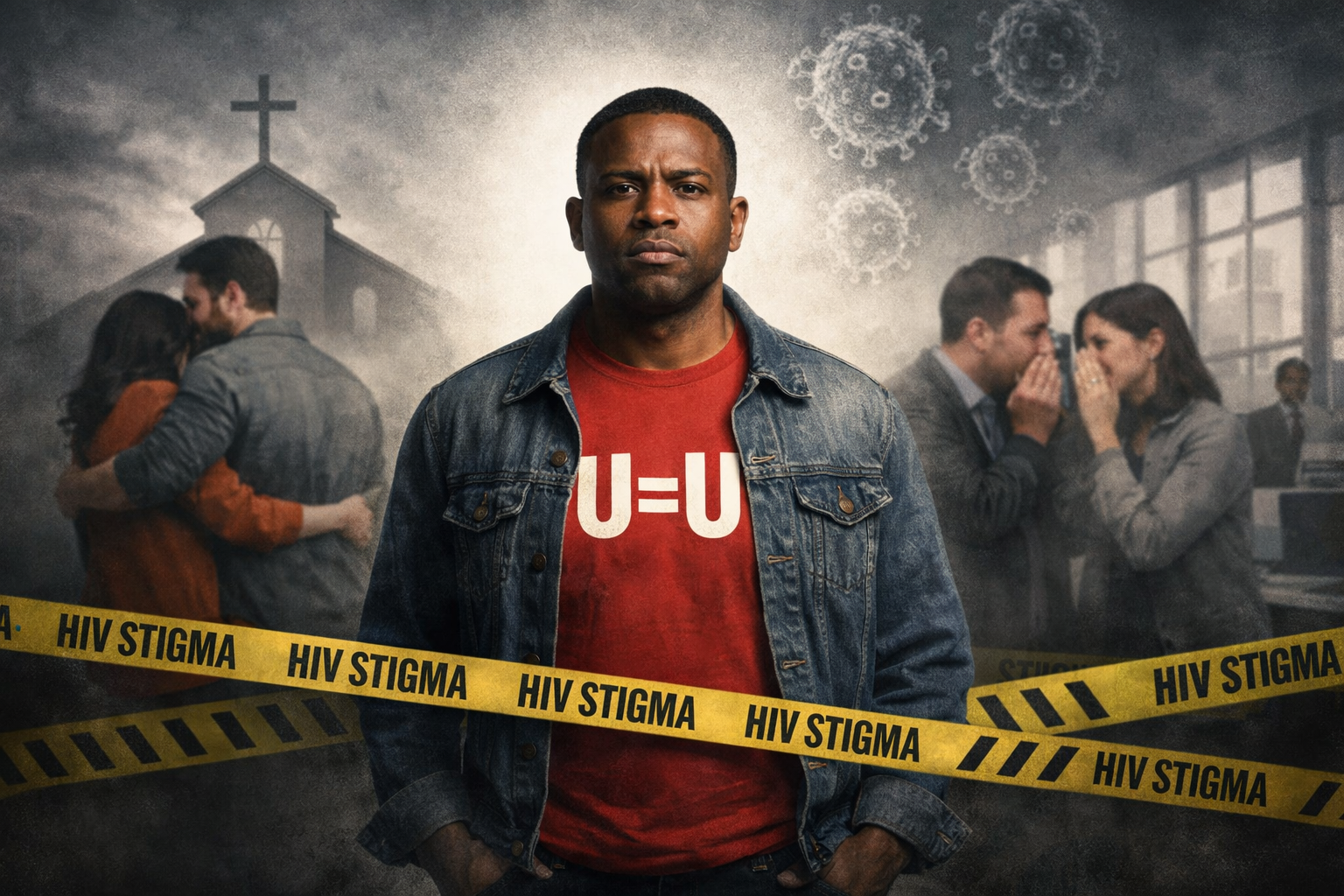
This is what we call U=U: Undetectable = Untransmittable.
It is not a theory.
It is not hope.
It is not optimism.
It is scientific consensus.
And yet—despite this—
People who are undetectable are still treated as dangerous.
Still avoided.
Still rejected.
Still judged.
So the real question isn’t medical anymore.
It’s social.
Why does U=U not translate into dignity?
The Day Science Won—and Society Refused to Catch Up
If this were purely about knowledge, stigma would be gone by now.
But it isn’t.
Most people don’t reject someone living with HIV because they’ve carefully reviewed the science and disagreed with it.
They reject them because of something deeper:
fear, identity, and social cost.
U=U challenges a belief system people have held onto for decades—that HIV is something you must stay far away from to be safe.
Now science is saying:
“You don’t need to be afraid anymore.”
But society responds:
“I’d rather stay afraid than rethink everything I believe.”
Because accepting U=U doesn’t just require learning something new.
It requires unlearning fear.
And that is much harder.
Dating: Where U=U Meets Reality—and Still Loses
This is where the contradiction becomes painfully real.
Someone discloses:
“I’m HIV positive… but I’m undetectable.”
What should follow, if society trusted science, is this:
Understanding.
Curiosity.
Respect.
What often follows instead is silence.
Or distance.
Or the polite version of rejection:
“I just think we’re not a good fit.”
Let’s not pretend.
It’s not about compatibility.
It’s about stigma—just dressed up to look socially acceptable.
Even people who understand U=U intellectually struggle to act on it emotionally.
Because dating isn’t just about facts.
It’s about perception.
And in many people’s minds, HIV still carries a label that says:
“Risk.”
“Danger.”
“Something is wrong here.”
Even when the science says the opposite.
So the person who is undetectable ends up facing a brutal reality:
You can do everything right medically—and still be punished socially.
Friendships: The Subtle Distance No One Talks About
Not all stigma is loud.
Some of it is quiet.
It shows up in small ways:
A joke that lands wrong.
A pause when the topic comes up.
A shift in how someone looks at you after they find out.
No one says, “I’m afraid of you.”
But something changes.
And you feel it.
That’s what makes this kind of stigma more dangerous.
It hides behind normal interactions while quietly reinforcing the same message:
“You are different now.”
Even when nothing about you has changed.
Church: Where Grace Is Preached—but Not Always Practiced
This is where things get even more uncomfortable.
Because churches often position themselves as places of love, healing, and acceptance.
But when it comes to HIV, especially in many communities, something breaks.
People living with HIV are sometimes:
Prayed for like they are broken.
Avoided like they are contagious beyond reason.
Judged like their status is a reflection of their morality.
Let’s be honest.
U=U doesn’t just challenge science denial—it challenges moral narratives.
Because for years, HIV has been tied—wrongly—to ideas of sin, punishment, or “bad decisions.”
So even when the science changes, the moral framing stays the same.
And that’s why someone can sit in a church, fully healthy, undetectable, and still feel completely alone.
Workplace: The Invisible Barrier
In professional spaces, stigma becomes more strategic.
Less emotional.
More calculated.
People may not openly discriminate—but they quietly reassess:
“Is this person reliable?”
“Will this affect their performance?”
“Is this something we need to worry about?”
None of these questions are grounded in science.
They are grounded in perception.
And perception, in this case, is outdated.
The result?
People living with HIV often feel like they have to:
Overperform.
Overprove.
Overcompensate.
Just to be seen as equal.
The Real Problem: U=U Is Scientific—But Stigma Is Social
Here’s the mistake most awareness campaigns make:
They assume that if people understand U=U, stigma will disappear.
That’s naive.
Because stigma was never just about information.
It’s about:
- Fear of association
- Fear of judgment
- Fear of “what others will think”
- Deeply ingrained cultural narratives
U=U solves transmission.
It does not automatically solve perception.
And until we confront that directly, we will keep repeating the same cycle:
More education.
More campaigns.
Same outcomes.
So What Actually Needs to Change?
If you want this conversation to move forward, you have to shift the focus.
Stop treating stigma as a knowledge gap.
Start treating it as a social behavior problem.
Because people already believe science in other areas when it benefits them.
The issue here is not belief.
It’s discomfort.
To close the gap between U=U and dignity, three things need to happen:
1. Normalize Proximity
People need real, visible, everyday interactions with individuals living with HIV who are thriving.
Not as victims.
Not as “inspirational stories.”
But as normal people.

2. Challenge Social Risk
The biggest fear isn’t HIV itself.
It’s being associated with it.
That’s the real stigma.
Until people feel socially safe standing next to, dating, hiring, and befriending someone living with HIV, nothing changes.
3. Shift the Narrative from Fear to Reality
Right now, HIV still lives in a story from decades ago.
U=U disrupts that story—but the new one hasn’t been fully accepted yet.
And until it is, people will keep reacting to a version of HIV that no longer exists.
The Uncomfortable Truth
Here’s the part most people won’t say out loud:
If you still treat someone who is undetectable as a risk—
you are not following science.
You are following fear.
And fear, when left unchallenged, becomes discrimination.
What This Means for You
If you are living with HIV and are undetectable:
You are not the problem.
Your health is not in question.
Your worth is not reduced.
Your presence is not dangerous.
What you are experiencing is not a failure of science.
It is a failure of society to catch up.
Closing Thought
We like to believe that progress is automatic.
That once science advances, society follows.
But HIV has exposed something deeper:
Progress is not just about discovery.
It’s about acceptance.
And right now, acceptance is lagging far behind.
So we are left in this strange place:
Where someone can be medically safe—
but socially rejected.
Undetectable—
but still untouchable.

Leave a Reply