
A reflection on pastors, HIV “healing” testimonies, and the responsibility that comes with speaking into people’s lives
There is something deeply unsettling happening in some churches in Uganda.
People are standing before congregations and testifying that they have been healed of HIV.
They say that a pastor prayed for them.
They say that the HIV is gone.
Sometimes the congregation celebrates.
People clap.
People cry.
People praise God.
And then, somewhere in that celebration, a dangerous message can quietly take root:
HIV can be cured through prayer.
I want to be very careful about what I am saying here.
I believe in God.
I believe in prayer.
I believe that faith can transform people’s lives in profound ways.
I also believe that people should be free to share their experiences of faith.
But faith does not give any of us permission to present an unverified medical claim as fact.
And when the subject is HIV, the consequences of getting that distinction wrong can be devastating.
We should know better by now
I grew up in a generation that was taught about HIV everywhere.
We were taught about HIV in schools.
We heard messages on the radio.
We saw posters in health centres.
Churches talked about it.
Community health workers talked about it.
Parents talked about it.
Governments, civil society organisations, researchers, doctors, nurses, peer educators and people living openly with HIV spent years trying to make sure that Ugandans understood this epidemic.
We were taught to test.
We were taught about prevention.
We were taught about stigma.
We were taught that if you tested positive, you should seek care and begin treatment.
We were taught that HIV was manageable, but that treatment was essential.
That education did not happen by accident.
It was built through decades of work.
And yet, today, we are hearing testimonies that can take us backwards.
The message becomes:
“I went to church. The pastor prayed for me. I was tested and found HIV positive before, but now I have been healed.”
That statement may be sincere.
The person giving the testimony may genuinely believe it.
But sincerity is not the same thing as evidence.
There is a difference between faith and a medical diagnosis
This is where we need intellectual honesty.
If someone says:
“I was sick, I prayed, and I believe God gave me strength and healing,”
I have no problem with that.
That is a statement of faith and personal experience.
But if someone says:
“I had HIV, the pastor prayed for me, therefore I no longer have HIV and I don’t need treatment,”
we have crossed into a medical claim.
That claim requires medical evidence.
Not applause.
Not emotion.
Not the size of the congregation.
Not the reputation of the pastor.
Not how many people came forward.
A medical claim requires medical verification.
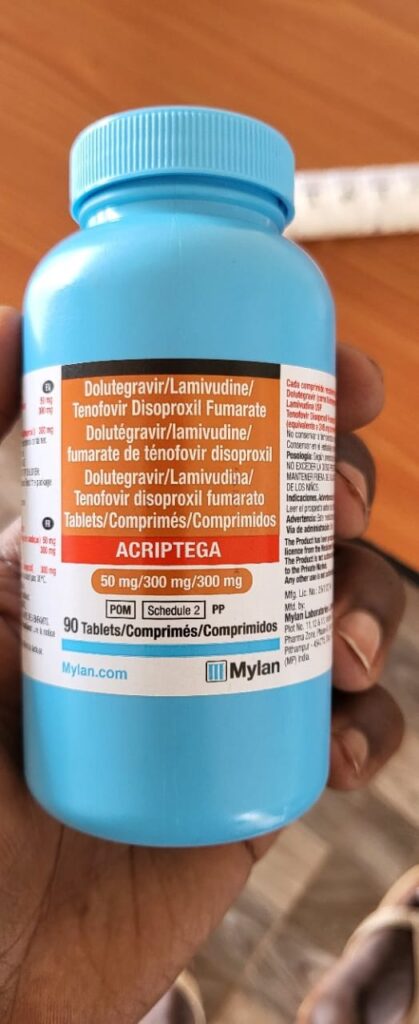
And according to the World Health Organization, there is currently no cure for HIV infection. HIV is treated with antiretroviral therapy, which suppresses the virus and allows people living with HIV to live long and healthy lives.
That is not an opinion from an HIV advocate.
It is not a Western conspiracy.
It is not an attack on Christianity.
It is medical science.
But what about the person who says they were healed?
This is where we need to be especially careful.
I am not interested in publicly humiliating people who give these testimonies.
Some may genuinely have misunderstood their test results.
Some may have been misdiagnosed.
Some may have received a different HIV test result later and interpreted that as a miracle.
Some may have achieved viral suppression through treatment and mistakenly understood “undetectable” to mean “cured.”
And some may simply be expressing their faith.
That is precisely why confirmation matters.
If someone believes they have been cured of HIV, the appropriate response should not be:
“Congratulations. Stop taking your medicine.”
It should be:
“That’s wonderful. Now let’s confirm your health status through appropriate medical testing.”
If the person is living with HIV and on ART, they should not stop treatment because somebody prayed for them.
They should speak to a qualified healthcare professional.
They should have their status and viral load appropriately assessed.
Their health should be protected, not gambled.
Undetectable is not the same as cured
This distinction is incredibly important.
Modern HIV treatment has achieved something extraordinary.
Antiretroviral therapy can reduce HIV in the blood to such low levels that it becomes undetectable on standard viral-load testing.
When a person on effective treatment has an undetectable viral load, they do not transmit HIV sexually. This is the foundation of the message commonly summarized as U=U: Undetectable equals Untransmittable.
That is an extraordinary victory.
But undetectable does not mean cured.
It means treatment is working.
The virus has been suppressed.
This distinction is not academic.
It can be the difference between someone remaining healthy and someone abandoning treatment.
Imagine the person sitting in that congregation
This is the part that concerns me most.
Imagine a young man sitting in church.
He was diagnosed with HIV six years ago.
He has been taking his medication.
His viral load is suppressed.
He has a normal life.
He works.
He has a girlfriend.
He has dreams.
He has children.
He has learned to live confidently with HIV.
Then one Sunday, someone stands up and says:
“I was HIV positive, but the pastor prayed for me and now I am healed.”
The congregation erupts.
The pastor reinforces the testimony.
People begin saying that God is curing HIV in that church.
The young man starts thinking:
“Maybe I don’t need these tablets anymore.”
Maybe he stops taking them.
Maybe he stops going to the clinic.
Maybe he stops attending his viral-load appointments.
Maybe he doesn’t tell his partner.
And months later, his health deteriorates.
This is not hypothetical risk.
Treatment interruption and loss of engagement in HIV care can have serious consequences.
That is why those who speak from positions of authority have a responsibility to think beyond the excitement of a testimony.
What about the HIV advocates?
This is where I become personally uncomfortable.
Because there are people who have spent their entire lives fighting the consequences of HIV.
There are nurses who have sat beside patients when nobody else would.
There are doctors and clinical officers who have worked long hours in HIV clinics.
There are counsellors who have walked with people through the terrifying days after diagnosis.
There are peer educators who have gone from village to village explaining HIV.
There are parents who have fought to keep their children in treatment.
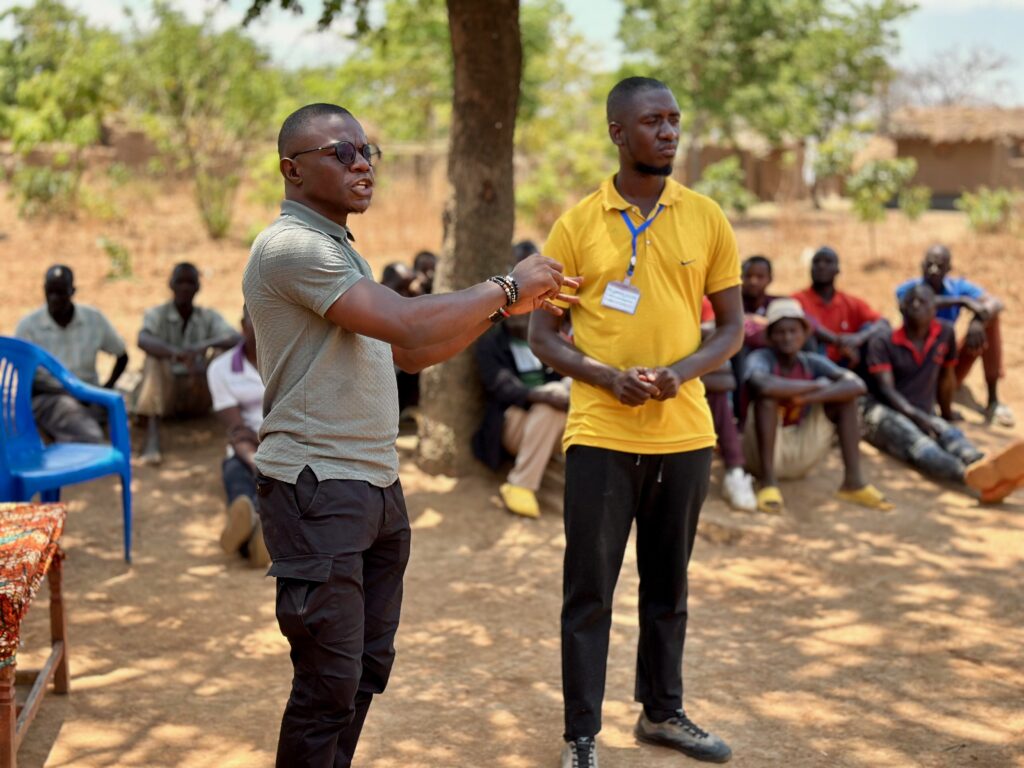
There are people living with HIV, like me, who have publicly disclosed their status despite enormous personal risk because they wanted somebody else to know:
“You can live.”
There are researchers who have spent years studying the virus.
There are organisations that have invested millions of dollars in treatment, prevention, testing, education and community systems.
There are government programmes that have built infrastructure around HIV care.
There are community volunteers who continue doing this work long after the cameras have left.
And there are people like me who have spent years sitting with communities, talking about HIV, challenging stigma and encouraging people to stay in care.
We did not do all of this because we lacked faith.
We did it because faith and responsibility are not enemies.
We have to stop treating science as the enemy of God
I think this is one of the conversations the church needs to have.
A person can pray and go to the hospital.
A person can believe in miracles and take their medication.
A person can trust God and listen to their doctor.
These things do not have to compete.
When I am sick, I can pray for healing and still seek medical care.
In fact, I would argue that seeking appropriate medical care is itself an expression of responsibility.
If God has given humanity the intelligence to discover antiretroviral medicines that allow people with HIV to live long and healthy lives, why should we treat those medicines as evidence that God has failed to act?
Why can’t we see medical progress as part of the goodness available to humanity?
Pastors have enormous influence
This is why I believe religious leaders must be held to a higher standard.
A pastor is not simply another person speaking in public.
People trust pastors.
People bring them their marriages, their children, their finances, their fears and their deepest questions.
When a pastor makes a statement from the pulpit, many people hear authority.
That authority should come with responsibility.
If a pastor says:
“Take this medicine and you will be healed,”
that is a medical claim.
If a pastor says:
“Stop your HIV medication because God has healed you,”
that can become a matter of life and death.
The pastor may not intend harm.
But good intentions do not eliminate consequences.
Testimony should not replace testing
There is a simple principle I wish we could normalize:
If someone claims to have been cured of HIV, test it.
Not because we want to disprove God.
Because we want to protect people.
If the person is truly no longer infected, medical science would be interested in that result.
A genuine cure would be extraordinarily important.
It would not need to be protected from scientific verification.
It would need to be investigated.
Imagine the implications.
If someone had genuinely been cured of HIV after prayer, the scientific and medical community would want to understand what happened.
The world would want to know.
Researchers would study it.
Hospitals would investigate it.
Scientists would ask questions.
A miracle that is real does not become less miraculous because somebody checks the evidence.
The damage goes beyond one person
This is bigger than individual treatment decisions.
When churches repeatedly communicate that HIV can be cured through prayer, we risk creating a parallel health narrative.
One based on testimony rather than evidence.
And once that narrative spreads, it becomes extremely difficult to correct.
It can increase stigma against people who remain on treatment.
Someone may begin asking:
“If God healed that person, why are you still taking ARVs?”
Another person may conclude:
“Maybe you don’t have enough faith.”
Suddenly, adherence becomes a spiritual issue.
A person taking life-saving medication can be made to feel spiritually inferior.
That is cruel.
It is also dangerous.
We cannot afford to go backwards
Uganda has invested enormous effort in building an HIV response.
The Ministry of Health launched the 2024–2025 Uganda Population-based HIV Impact Assessment specifically to strengthen the country’s evidence-driven HIV response, including measuring prevalence, viral-load suppression and how people access HIV services.
Uganda’s national HIV response has also been built around testing, treatment, adherence and viral suppression. The Uganda AIDS Commission explicitly states that there is no cure for HIV and that effective antiretroviral treatment allows people living with HIV to live longer and healthier lives.
This work matters.
Because HIV is not simply a religious issue.
It is not simply a medical issue.
It is a national development issue.
It affects families.
Children.
Household income.
Education.
Workplaces.
Healthcare systems.
Communities.
And ultimately, Uganda’s future.
The church can be part of the solution
My criticism of harmful HIV-healing claims should not be interpreted as an argument against the church.
Quite the opposite.
I believe the church can be one of Uganda’s greatest partners in the HIV response.
Churches have something public-health programmes sometimes struggle to build:
trust.
Pastors can encourage people to test.
They can challenge stigma.
They can encourage couples to communicate honestly.
They can encourage people living with HIV to remain in care.
They can support families.
They can create communities where people living with HIV are not treated as outcasts.
They can pray with people while also encouraging them to seek appropriate medical care.
Imagine the power of a pastor standing before a congregation and saying:
“If you are living with HIV, God has not abandoned you. Take your medication. Go for your appointments. Look after your health. You are loved, you are valuable, and you can live a full life.”
That is a message of faith.
That is a message of dignity.
That is also a message that saves lives.
To my fellow HIV advocates
We cannot become complacent.
Perhaps part of the reason these narratives are returning is because we assumed the basic education had already been won.
Maybe we thought everybody understood HIV.
They don’t.
The work continues.
We have to keep talking.
But we also have to improve how we talk.
We cannot simply respond with anger.
We need to respond with evidence.
We need to go into churches.
We need to engage pastors.
We need to train religious leaders.
We need to make HIV education relevant to a new generation.
And we need to tell stories that are just as powerful as miracle testimonies.
Because facts matter.
But stories move people.
To the pastors
I am not asking you to stop praying.
I am asking you to recognize the power you have.
Pray for people.
Encourage people.
Give people hope.
Tell people that their lives have value.
But please do not tell someone to abandon HIV treatment because you believe they have been healed.
If you believe someone has been miraculously cured, help them confirm it medically.
Let the evidence speak.
You do not need to compete with doctors.
You do not need to compete with scientists.
You do not need to compete with HIV advocates.
We are all supposed to be interested in one thing:
keeping people alive and helping them live well.
We have come too far to return to ignorance
I want to believe that Uganda can be a country where faith and science work together.
Where a pastor can pray for a patient while the doctor treats them.
Where churches can become safe spaces for people living with HIV.
Where a person can disclose their status without fear of rejection.
Where taking ARVs is not seen as a sign of weak faith.
Where a young person living with HIV can look at their future and see marriage, children, leadership, business, education and purpose.
We have already made enormous progress.
The global HIV response has shown that effective treatment can transform HIV from a life-threatening infection into a manageable chronic condition. In 2025, WHO reported that 95% of people globally who were receiving antiretroviral therapy had suppressed viral loads.
That is not a reason to stop believing.
It is a reason to celebrate what human beings can accomplish when science, resources, communities and determination come together.
Faith should give people hope—not misinformation
I believe in miracles.
But I also believe in truth.
And I refuse to believe that we have to choose between the two.
If someone living with HIV finds comfort in prayer, let us pray with them.
If they believe God has given them strength, let us celebrate their strength.
If their faith gives them hope, let us protect that hope.
But let us not turn hope into misinformation.
Let us not make people choose between their pastor and their doctor.
Let us not make medication look like a failure of faith.
And let us not undo decades of work because a testimony sounds powerful from a pulpit.
Because behind every HIV statistic is a human being.
Behind every medication refill is someone choosing to live.
Behind every viral-load test is a healthcare worker trying to protect someone’s future.
Behind every community programme is someone who decided that HIV would not destroy another generation.
We owe those people better.
And most importantly, we owe the people living with HIV better.
Pray for them.
Stand with them.
Love them.
Encourage them.
But please—
do not give them false hope when what they need is truthful hope.
Because there is nothing more Christian, more compassionate, or more responsible than helping someone believe in tomorrow while making sure they are still here to see it.

Leave a Reply