I expected danger in Mozambique—but found something completely different. A personal story about perception, fear, and reality.
Before I landed in Mozambique, I had already made up my mind about it.
Not consciously. Not deliberately. But it had already happened.
Floods. Terrorism. Instability.
That’s what came up when I searched. That’s what the videos showed. That’s what the headlines pushed to the top. And without questioning it, I accepted it.
Mozambique, in my mind, wasn’t a place.
It was a warning.
A place you pass through carefully. A place you stay alert in. A place you don’t fully relax.
So when I got on that plane, I wasn’t just traveling.
I was preparing myself.
I Trusted Information I Had Never Experienced
This is the part we don’t like to admit.
We trust things we’ve never experienced all the time.
We read. We watch. We scroll. And then we form opinions that feel real—even when they’re not ours.
That’s exactly what I did.
I didn’t know Mozambique.
I knew about Mozambique.
And I treated those two things like they were the same.
They’re not.
Not even close.
Because information gives you fragments. Headlines. Highlights. Extremes.
Experience gives you context.
And without context, even true information can mislead you.
Johannesburg: Where Doubt Started Creeping In
On my way there, I stopped in Johannesburg.
Two hours.
Two hours doesn’t sound like much—but it was enough.
Enough time to sit still.
Enough time to think.
Enough time for the confidence I had built from the internet to start cracking.
I remember sitting there, replaying everything I had seen online.
The images. The headlines. The warnings.
And for the first time, a different thought came in:
What if I don’t actually know what I’m walking into?
Not fear exactly—but uncertainty.
And that uncertainty was honest.
Because for the first time, I wasn’t pretending to understand something I had never experienced.
But here’s what I didn’t realize in that moment:
I wasn’t afraid of Mozambique.
I was afraid of a version of Mozambique that had been constructed for me.
And I had accepted it without resistance.
Then I Landed… and Nothing Matched
I expected to feel something immediately.
Tension. Unease. Alertness.
Something.
But I didn’t.
Everything felt… normal.
And that’s what threw me off the most.
The airport wasn’t chaotic. No one was rushing in panic. There was no visible sense of danger in the air.
People were just moving. Talking. Waiting. Living.
The kind of normal that never makes it online.
And that’s when the first real shift happened:
This doesn’t match the story.
Not even slightly.
The Mozambique I Actually Experienced
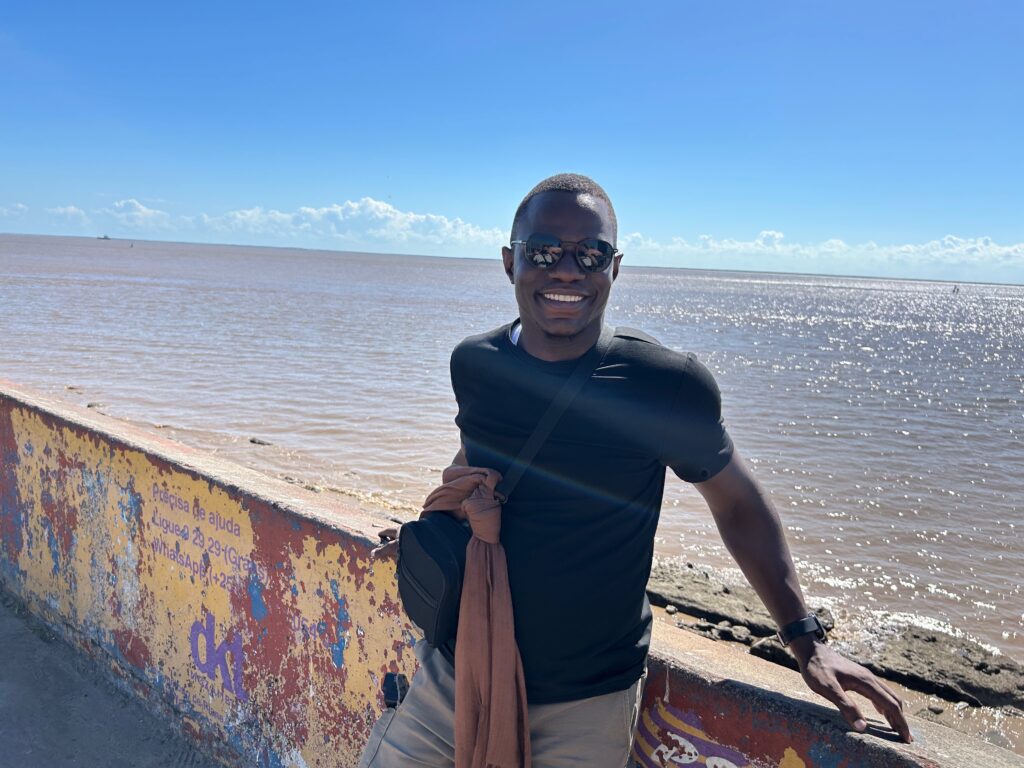
Over the next few days, that realization became impossible to ignore.
Mozambique wasn’t what I had prepared for.
It wasn’t hostile.
It wasn’t unstable.
It wasn’t this looming danger waiting to reveal itself.
It was calm.
It was open.
It was welcoming in a way that didn’t feel forced or performative.
The people I met were warm—genuinely warm.
Not the kind of politeness people put on for visitors.
But something more grounded.
You could feel it in the way conversations happened. In the way people listened. In the way they carried themselves.
There was no tension behind their eyes.
No guarded energy.
Just presence.
And that’s when I had to confront something uncomfortable:
I hadn’t misunderstood Mozambique slightly.
I had misunderstood it completely.
The Quiet Moments That Changed Everything
It wasn’t one big moment that changed my perception.
It was the small ones.
A conversation that lasted longer than expected.
A laugh that didn’t feel rehearsed.
A moment of stillness where nothing was happening—and that was the point.
Those are the moments you don’t see online.
Those are the moments that don’t go viral.
But those are the moments that show you the truth of a place.
Because real life is not built on extremes.
It’s built on ordinary, consistent, human experiences.
And Mozambique was full of them.
The Internet Lied—But Not in the Way You Think
Here’s the uncomfortable truth.
The internet didn’t lie to me.
It just didn’t tell me the whole story.
And that’s more dangerous.
Because partial truth feels like complete truth.
You see floods—you think the country is drowning.
You see conflict—you think instability is everywhere.
You see one narrative repeated enough times—and it becomes your reality.
But reality is more complex than that.
Every country has challenges.
But no country is only its challenges.
And when that’s all you see, your perception becomes distorted.
This Was Bigger Than Travel for Me
I didn’t go to Mozambique just as a traveler.
I went as someone working in HIV advocacy.
And that changed everything.
Because I’ve seen this pattern before.
I’ve seen how people misunderstand HIV.
How they reduce it to fear.
How they define it by limitation.
How they build entire beliefs around outdated or incomplete information.
And standing in Mozambique, it hit me:
This is the same pattern.
Different subject. Same behavior.
Stigma and Perception Follow the Same Rules
Stigma comes from distance.
The less you understand something, the easier it is to fear it.
The easier it is to simplify it.
The easier it is to get it wrong.
That’s true for HIV.
And it’s true for places.
Before people understand HIV, they often assume the worst.
Before people visit certain countries, they do the same thing.
They rely on second-hand narratives.
They trust information they’ve never tested.
They become confident in something they’ve never experienced.
I did the same thing.
That’s the part that stays with me.
The Moment Everything Shifted
At some point, I stopped comparing what I was seeing to what I expected.
Because expectation had already lost.
Reality had replaced it.
And in that moment, something deeper clicked:
I need to question what I think I know more often.
Because if I could be this wrong about a place—
What else am I wrong about?
That question doesn’t leave you quickly.
And it shouldn’t.
Because it changes how you move.
How you listen.
How you interpret the world.
The Danger of a Single Story
When one narrative dominates, everything else disappears.
Mozambique becomes “dangerous.”
HIV becomes “a death sentence.”
Africa becomes “a problem.”
But those are not truths.
They are reductions.
And reductions erase reality.
Because no place—and no condition—is defined by one story.
Mozambique is not just headlines.
It’s people.
It’s rhythm.
It’s daily life happening quietly, without needing attention to be real.
And when we ignore that, we don’t just misunderstand.
We oversimplify.
What I’m Leaving With
I didn’t just leave Mozambique with memories.
I left with awareness.
A sharper understanding of how easily perception is shaped—and how easily it can be wrong.
I was reminded that:
Not everything you read is the full picture.
Not everything you hear is the truth.
And not everything you believe is accurate.
But more importantly:
I was reminded to stay open.
Because growth doesn’t come from being right.
It comes from being willing to be wrong—and to learn from it.
Final Thought
Mozambique didn’t match what I expected.
And that’s exactly why it mattered.
Because it forced me to confront something bigger than travel.
It forced me to confront how I think.
We live in a world where information is constant.
But understanding still requires effort.
It requires presence.
It requires experience.
And sometimes, the only way to truly understand something—
is to step into it yourself.
Mozambique didn’t just change how I see one country.
It changed how I see everything I think I know.


Leave a Reply