
Why some men would rather suffer in silence than admit they are afraid
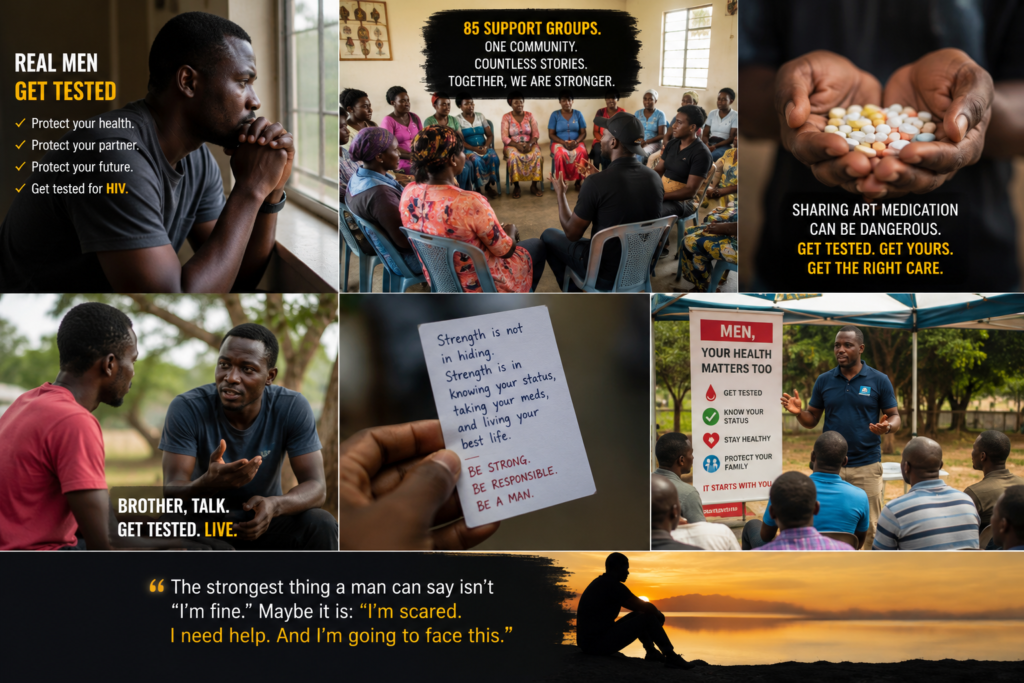
A man is taught many things growing up.
Don’t cry.
Don’t complain.
Don’t admit you’re afraid.
Take care of yourself.
Protect your family.
Be strong.
Be a man.
These lessons can be useful. Responsibility, courage, resilience and self-reliance are qualities worth having.
But what happens when the same definition of masculinity makes it difficult for a man to admit that something is wrong?
What happens when he is afraid?
What happens when he needs help?
And what happens when a healthcare worker tells him:
“Your HIV test is positive.”
Suddenly, everything he has been taught about being a man can become complicated.
Because HIV does not only threaten a man’s physical health.
For some men, it threatens their identity.
It raises questions about sexuality, relationships, fertility, strength, trust and even their sense of worth.
And sometimes, rather than face those questions, men choose silence.
That silence is costing us.
The men missing from the room
At He Intends Victory, we have 85 support groups serving people living with and affected by HIV.
One thing has become increasingly obvious to me:
Most of our members are women.
That doesn’t mean men aren’t living with HIV.
They are.
Uganda’s HIV data show that hundreds of thousands of adult men are living with HIV. At the end of 2024, the Uganda AIDS Commission estimated about 304,000 adult men living with HIV, compared with about 496,000 adult women.
The question, therefore, isn’t simply where the men are.
The more difficult question is:
Why aren’t more men showing up?
Why are women more visible in support groups?
Why do women seem more willing to engage with services?
Why do men sometimes wait until they are seriously ill before seeking help?
Why would a man sometimes use his wife’s or partner’s antiretroviral medication instead of going to a health facility himself?
These aren’t merely questions about HIV.
They are questions about masculinity.
We have taught men to hide weakness
From childhood, many boys learn that vulnerability is dangerous.
A boy falls down and is told to get up.
A boy cries and someone tells him to stop.
A young man is expected to solve his own problems.
He is expected to provide.
To protect.
To endure.
To keep his emotions under control.
Eventually, asking for help can begin to feel like admitting failure.
This becomes particularly dangerous when the problem is HIV.
Because getting an HIV test requires a man to acknowledge that he may be vulnerable.
Going to an HIV clinic requires him to acknowledge that he may need help.
Joining a support group requires him to sit among other people and admit that he is living with something he may have spent years trying to hide.
For someone who has been taught that a “real man” handles everything himself, that can feel like an assault on his identity.
So he avoids the test.
He avoids the clinic.
He avoids the conversation.
And sometimes, he waits until his body makes the decision for him.
The late arrival
One of the challenges in HIV care is that men can be less engaged with testing and treatment services than women.
Uganda’s own HIV planning documents have identified gender norms as factors influencing the health-seeking behavior of men and boys. They have also documented lower levels of treatment initiation and retention among adult men compared with adult women in earlier national targets and monitoring frameworks.
This matters because HIV treatment works best when people know their status and begin treatment early.
But if a man waits until he is visibly sick, HIV testing becomes something he does because his body has forced him to—not because he took responsibility for his health.
That is not strength.
That is delayed vulnerability.
And by the time a man finally seeks help, he may be dealing with more than HIV.
He may be dealing with opportunistic infections, financial pressure, relationship problems, fear, shame and the psychological consequences of having waited so long.
“My wife already takes ARVs”
There is another practice that concerns me.
In our work, we have encountered situations where some men who have never gone to the hospital for HIV testing or treatment have taken or shared their spouses’ antiretroviral medication.
Think about what that means.
A man may suspect that he has HIV.
Instead of going to a health facility, getting tested and receiving treatment appropriate to his own clinical situation, he takes medication that was prescribed for somebody else.
Why?
Sometimes it may be fear.
Sometimes stigma.
Sometimes the belief that going to the hospital will expose him.
Sometimes it is simply the idea that he can manage the situation himself.
But HIV treatment is not something to experiment with.
The right medication, dose, monitoring and follow-up matter. And if someone suspects they have HIV, the answer is not to borrow somebody else’s medication.
The answer is to test.
If the result is positive, get into care.
If the result is negative, understand what that means and what prevention options are appropriate.
Either way, you know where you stand.
There is nothing masculine about gambling with your health.
The sexual dimension makes everything harder
We also need to talk about sex.
HIV is deeply connected to sexuality, and masculinity is often deeply connected to sexual identity.
Many men grow up with an idea of masculinity that equates being a man with sexual strength and performance.
Being sexually active is celebrated.
Having multiple partners can sometimes even increase a man’s social status among his peers.
But HIV introduces a completely different conversation.
It forces questions about sexual behavior.
It raises the possibility of disclosure.
It can create fear about whether a partner will trust you.
And for some men, an HIV diagnosis becomes psychologically connected to questions like:
“Am I still a real man?”
“Will anyone want me?”
“Will my wife leave me?”
“Will people think I was unfaithful?”
“What will my friends say?”
These questions can be more frightening than the medical diagnosis itself.
And because men are often discouraged from discussing their fears openly, those questions remain inside their heads.
The silence around disclosure
Imagine being a married man who discovers that he is HIV positive.
The first thought may not be:
“I need to see a doctor.”
It may be:
“How am I going to tell my wife?”
Then:
“Will she think I cheated?”
“Will she leave me?”
“What about my children?”
“What will her family say?”
“What will my family say?”
The fear becomes enormous.
And when a man doesn’t know how to process fear, he may choose avoidance.
He doesn’t disclose.
He doesn’t seek treatment.
He doesn’t attend a support group.
He doesn’t tell anyone.
He carries the entire burden alone.
But secrecy does not make HIV disappear.
It simply makes the man carry it alone.
The women are already doing the work
There is something else I have observed through our support groups.
Women are often carrying enormous responsibilities in the HIV response.
They attend clinics.
They participate in support groups.
They talk to healthcare workers.
They seek information.
They support children.
They remind family members about medication.
They share experiences.
They build networks.
And yet, many of the men in their lives remain outside these spaces.
This creates an imbalance.
Women become the visible participants in HIV care while men remain harder to reach.
We cannot continue designing HIV programmes around the assumption that everyone will engage with services in the same way.
Men may need different entry points.
Different messages.
Different environments.
Different conversations.
Not because men are incapable of seeking care.
But because the social expectations surrounding masculinity can create specific barriers.
What if the problem isn’t that men don’t care?
This is an important distinction.
It would be easy to accuse men of being irresponsible.
“Why don’t they just test?”
“Why don’t they go to the hospital?”
“Why are they so stubborn?”
But that doesn’t take us far enough.
Maybe some men don’t go because they don’t care.
But perhaps others don’t go because they care deeply about what people will think.
Maybe they are afraid.
Maybe they are ashamed.
Maybe they don’t know how to tell their partners.
Maybe they associate the HIV clinic with weakness.
Maybe they have never been given a safe environment where they can admit:
“I don’t know what to do.”
If that is part of the problem, then simply telling men to “be responsible” isn’t enough.
We need to understand the culture that taught them not to seek help.
Strength has to be redefined
Perhaps we need to teach boys and men a different definition of strength.
Strength isn’t pretending you aren’t afraid.
Strength is getting tested.
Strength is asking questions.
Strength is going to the hospital.
Strength is taking your medication.
Strength is protecting your health.
Strength is telling your partner the truth.
Strength is admitting that you don’t have all the answers.
Strength is choosing your children’s future over your pride.
Strength is saying:
“I am scared, but I am going to face this.”
That is not weakness.
That is courage.
We need men in the HIV conversation
Uganda cannot end AIDS as a public-health threat while leaving a significant portion of men on the margins of HIV services.
The Uganda AIDS Commission’s 2024 data show that HIV remains a major national issue, with hundreds of thousands of people living with HIV and thousands of new infections each year.
The country has made extraordinary progress.
But progress can create complacency.
We sometimes talk about HIV as though everyone already knows what to do.
Test.
Treat.
Adhere.
Monitor your viral load.
Prevent transmission.
But knowing the instructions isn’t the same as being psychologically prepared to follow them.
For some men, the barrier isn’t information.
It is identity.
And if we want to reach them, we have to address both.
We need to take HIV to places men already are
Perhaps we have spent too much time waiting for men to come into traditional HIV spaces.
Maybe we need to go where men already gather.
Workplaces.
Sports clubs.
Barbershops.
Motorcycle stages.
Factories.
Construction sites.
Church men’s groups.
Fishing communities.
Businesses.
Community meetings.
Social clubs.
We need conversations that don’t begin with:
“You men are not testing.”
They should begin with:
“What makes it difficult for men to test?”
Then listen.
Really listen.
Because if we want men to become part of the solution, we have to stop talking about them only as a problem.
Churches have a role too
Religious institutions can play an important role here.
Men often listen to pastors, priests and other religious leaders.
A church can be a place where a man learns that seeking healthcare isn’t a failure of faith.
Imagine a pastor telling the men in his congregation:
“If you don’t know your HIV status, go and test.”
“If you are living with HIV, take your medication.”
“If you are struggling emotionally, talk to someone.”
“If you are afraid, you don’t have to face that fear alone.”
That message could save lives.
And it doesn’t require the church to become a hospital.
It requires the church to become a place where seeking help is not shameful.
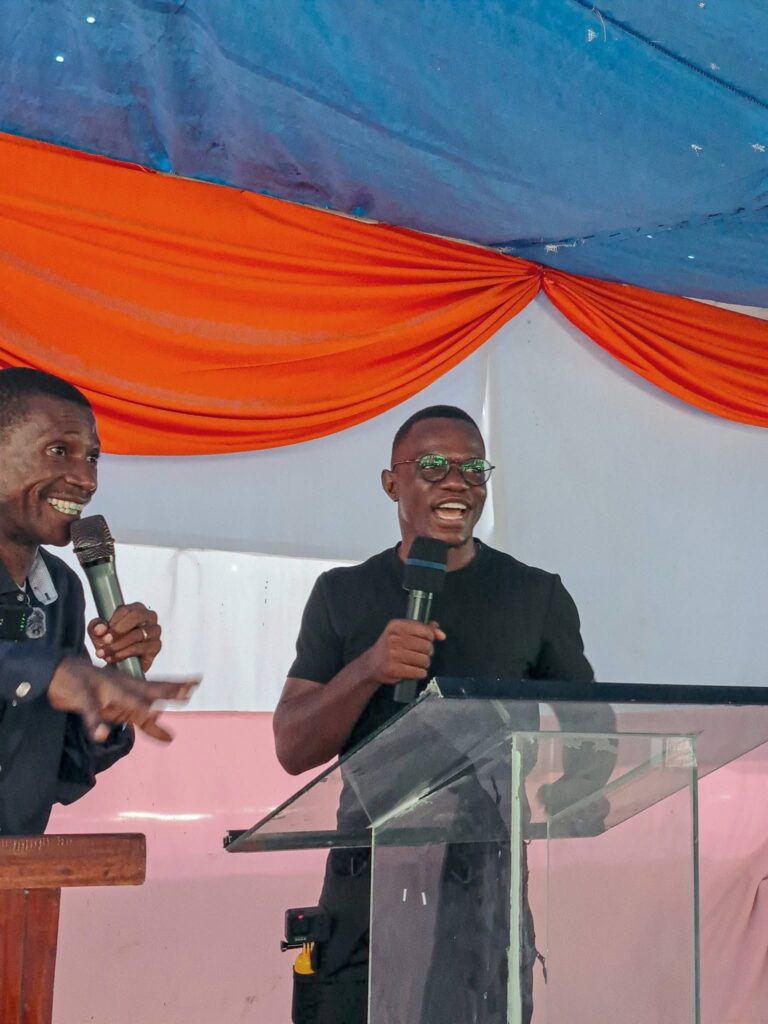
Men need spaces where they can tell the truth
Perhaps one reason women have become such a powerful part of community HIV programmes is that they have created spaces where they can speak.
They talk about their experiences.
They encourage one another.
They share information.
They support one another through difficult moments.
Men need spaces like that too.
Not necessarily spaces where men sit in a circle and are forced to talk about their feelings.
But spaces where men can have honest conversations about health, relationships, sex, fatherhood, fear, responsibility and the future.
A man’s support network should not begin only after he becomes seriously ill.
It should exist before the crisis.
I know what HIV looks like from the inside
I was born with HIV.
So I am not writing this as someone standing outside the problem.
I know what it means to have HIV as part of your story.
I know the questions.
I know the conversations.
And I have spent years working with people living with HIV and watching how differently men and women can engage with support and care.
That is why this issue matters to me.
I don’t want men to be shamed into testing.
I want them to understand that testing is an act of responsibility.
I don’t want men to be frightened into treatment.
I want them to understand that treatment is an investment in their future.
I don’t want men to be told that vulnerability makes them less masculine.
I want us to build a culture where vulnerability is understood as part of courage.
The man who finally walks into the clinic
Imagine a different story.
A man wakes up one morning and realizes he has never tested for HIV.
Instead of ignoring the thought, he goes to the health centre.
He gets tested.
Maybe the result is negative.
He leaves with information and a plan to protect his health.
Maybe the result is positive.
He is frightened.
But he doesn’t run.
He speaks to the healthcare worker.
He begins treatment.
He learns about viral suppression.
He gets support.
He eventually tells his partner.
He joins a community.
He continues working.
He continues loving.
He continues raising his children.
He continues dreaming.
That man has not become weaker.
He has become responsible.
He has chosen life over pride.
The real battle
The HIV epidemic has never been only about a virus.
It has always been about human behavior, relationships, stigma, inequality, access to healthcare, education and the choices communities make.
For men, it is also about the stories we tell them about what it means to be strong.
If masculinity tells a man:
“Never admit that you are afraid,”
then HIV will find a particularly powerful hiding place.
But if we teach men:
“You can be afraid and still act responsibly,”
we change the equation.
We make testing normal.
We make treatment normal.
We make asking for help normal.
We make vulnerability normal.
And perhaps most importantly, we give men permission to live.
We need men at the table
The future of HIV prevention and treatment in Uganda cannot be built around women carrying the burden of engagement while men remain difficult to reach.
Our 85 support groups have taught me something simple:
If most of the people showing up are women, we need to ask where the men are—and why.
Not to blame them.
Not to shame them.
But to understand them.
Because the goal isn’t to win an argument with men about HIV.
The goal is to keep them healthy.
To keep their partners healthy.
To protect their children.
To reduce new infections.
To support families.
And to build a country where HIV is managed with knowledge rather than fear.
Maybe the strongest thing a man can say isn’t:
“I’m fine.”
Maybe it is:
“I’m scared. I need help. And I’m going to face this.”
That is not weakness.
That is strength.
And if we can teach more men to believe that, we may finally begin reaching the men who have been missing from the room.

Leave a Reply