
We tell people living with HIV to disclose. We rarely ask what happens after they do.
There is a sentence almost every person living with HIV will eventually hear:
“You need to tell them.”
Tell your partner. Tell the person you’re dating.
Tell the person you’re about to become intimate with.
Be honest.
Do the right thing.
At first glance, it sounds simple.
And morally, honesty in intimate relationships matters deeply.
But after living with HIV my entire life, I have come to understand something about disclosure that we don’t discuss enough:
Disclosure isn’t simply the transfer of information. It is the transfer of power.
Before I tell someone that I am living with HIV, the information belongs to me.
I decide who knows.
I decide when they know.
I decide how much they know.
The moment I disclose, that changes.
Another human being now possesses one of the most personal pieces of information about me.
I cannot take it back.
I cannot control what they think about it.
I cannot guarantee they will understand it.
I cannot guarantee they will keep it private.
And I cannot guarantee that they will still see me the same way afterward.
That is why disclosure is not simply an honesty conversation.
For many people living with HIV, it is also risk management.
“Just tell them”
I’ve always found the phrase interesting.
“Just tell them.”
There is nothing “just” about it.
Imagine sitting across from someone you’re beginning to care about.
Perhaps you’ve been talking for weeks.
Maybe months.
You’re beginning to trust each other.
You’re laughing together.
You’re imagining possibilities.
Then you know there is a conversation coming.
You rehearse it in your head.
When should I tell her?
How do I say it?
Do I tell her immediately?
Do I wait until she knows me better?
If I wait, will she think I deceived her?
If I tell her too early, will she walk away before she has had the chance to know me?
Will she understand U=U?
Will she think I’m dangerous?
Will she tell her friends?
Will her friends convince her to leave?
Will this become something people whisper about me?
Suddenly, disclosure is not one conversation.
It is twenty conversations happening inside your head before you’ve even opened your mouth.
Before disclosure, we are equals
This is where I began thinking differently about disclosure.
Before disclosure, two people are simply getting to know each other.
You both have histories.
You both have fears.
You both have things you haven’t revealed yet.
You both have vulnerabilities.
Then one person says:
“I’m living with HIV.”
The emotional balance can change instantly.
Now one person is waiting.
And the other is deciding.
Will I accept you?
Will I reject you?
Will I trust you?
Will I continue seeing you?
Will I tell someone else?
For a few moments, one person can feel as though they are standing before a judge.
And the other holds the verdict.
That is power.
Not necessarily because the other person wants power.
Often they don’t even realize they have it.
But the vulnerability created by disclosure produces an imbalance.
One person has revealed something society has taught them to fear being rejected for.
The other gets to respond.
Rejection isn’t the only risk
We often talk about disclosure as though rejection is the worst possible outcome.
It isn’t.
Someone can reject you respectfully.
They can say:
“Thank you for trusting me. I don’t think I’m prepared for this relationship.”
That may hurt.
But at least there is dignity.
There are other possibilities.
Someone can tell their friends.
Someone can tell your colleagues.
Someone can tell your family.
Someone can screenshot your messages.
Someone can use your status during an argument.
Someone can threaten to expose you.
Someone can turn something you shared privately into gossip.
For some people, disclosure can even create risks of violence, abandonment, economic insecurity, or social exclusion.
Once information leaves your mouth, you cannot control where it travels.
That’s why telling a person living with HIV to “just disclose” without considering their circumstances is inadequate advice.
Who carries the risk?
This is the question that changed how I think about disclosure.
When society demands disclosure, who carries most of the consequences?
Usually, the person living with HIV.
We are expected to disclose.
We carry the fear.
We face the possibility of rejection.
We risk our privacy.
We potentially face stigma.
We have to explain the science.
We may have to reassure the other person.
We may have to answer questions.
And sometimes, after doing all of that, we still have to watch someone leave.
Meanwhile, the person receiving the disclosure can walk away carrying information about us that we can never retrieve.
That doesn’t mean they are wrong for deciding that a relationship isn’t for them.
Everyone has the right to make informed decisions about their relationships and sexual health.
But perhaps disclosure conversations need to include responsibility on both sides.
If someone trusts you enough to tell you that they are living with HIV, what responsibility do you now have toward their dignity?
What responsibility do you have toward their privacy?
What responsibility do you have to educate yourself before reacting?
Disclosure should not create responsibility only for the person disclosing.
Receiving someone’s disclosure is a responsibility too.
HIV disclosure is strangely one-sided
Consider dating more broadly.
People carry many things into relationships.
Past relationships.
Trauma.
Debt.
Fertility concerns.
Mental-health struggles.
Family complications.
Sexual histories.
Mistakes.
Fears.
Health conditions.
Most of these things are revealed gradually as trust develops.
We accept that intimacy takes time.
But HIV often operates under a different expectation.
The person living with HIV can feel pressure to reveal one of the most intimate details about themselves very early, sometimes before they know whether the other person can be trusted with it.
That creates a difficult contradiction:
You are expected to trust someone with your deepest vulnerability before you have had enough time to discover whether they are trustworthy.
That is the disclosure dilemma.
Tell too early, and a stranger receives extremely private information.
Tell too late, and someone may feel you deliberately withheld something important.
So where is the perfect moment?
I don’t think there is one.
There is only judgment, responsibility, context, safety, trust—and, where applicable, the law.
Then science changed the conversation
There is another reason we need to rethink how we talk about disclosure.
HIV science has changed dramatically.
Effective antiretroviral treatment can suppress HIV to undetectable levels. A person living with HIV who maintains an undetectable viral load does not sexually transmit HIV.
Undetectable = Untransmittable. U=U.
That scientific reality has transformed what relationships between HIV-positive and HIV-negative people can look like.
But social attitudes haven’t always caught up.
A person may have maintained viral suppression for years.
They may understand their health.
They may take their medication consistently.
Medically, they pose no sexual transmission risk while maintaining viral suppression.
Yet emotionally, disclosure can still feel like confessing to something dangerous.
That gap between medical reality and social perception is one of the cruellest parts of modern HIV stigma.
Science says:
“This person is not a sexual transmission risk while durably undetectable.”
Stigma says:
“Be careful.”
Science says:
“People living with HIV can have healthy relationships and families.”
Fear says:
“But what if?”
And the person living with HIV is left standing between those two worlds.
Disclosure can become a test of worth
This is perhaps the most psychologically dangerous part.
After enough disclosure experiences, you can begin treating people’s reactions as measurements of your value.
If they stay:
“I’m worthy.”
If they leave:
“Something is wrong with me.”
That is a dangerous way to live.
Someone’s decision about whether they are comfortable dating a person living with HIV tells you something about their decision, their knowledge, their fears, their circumstances and their preferences.
It does not provide an objective measurement of your worth.
But emotionally, separating those things isn’t always easy.
Especially when you care about the person.
You aren’t simply revealing medical information anymore.
You’re asking a much deeper question:
“Now that you know this about me, do you still want me?”
That is why disclosure can be psychologically exhausting.
We need to stop romanticizing disclosure
Advocacy campaigns sometimes portray disclosure as inherently liberating.
“Tell your story.”
“Break the silence.”
“Live openly.”
I understand why.
My own life has been shaped by choosing to speak openly about HIV.
There is extraordinary power in refusing to live in shame.
But openness has costs.
Not everyone needs to become an activist.
Not everyone needs to tell their workplace.
Not everyone needs to tell their friends.
Not everyone needs to tell the internet.
Privacy is not shame.
Let me say that again.
Privacy is not shame.
A person can accept themselves completely and still decide that their medical information belongs only to a small circle of people.
We need to stop measuring courage by how publicly someone discloses.
Public disclosure creates another kind of power
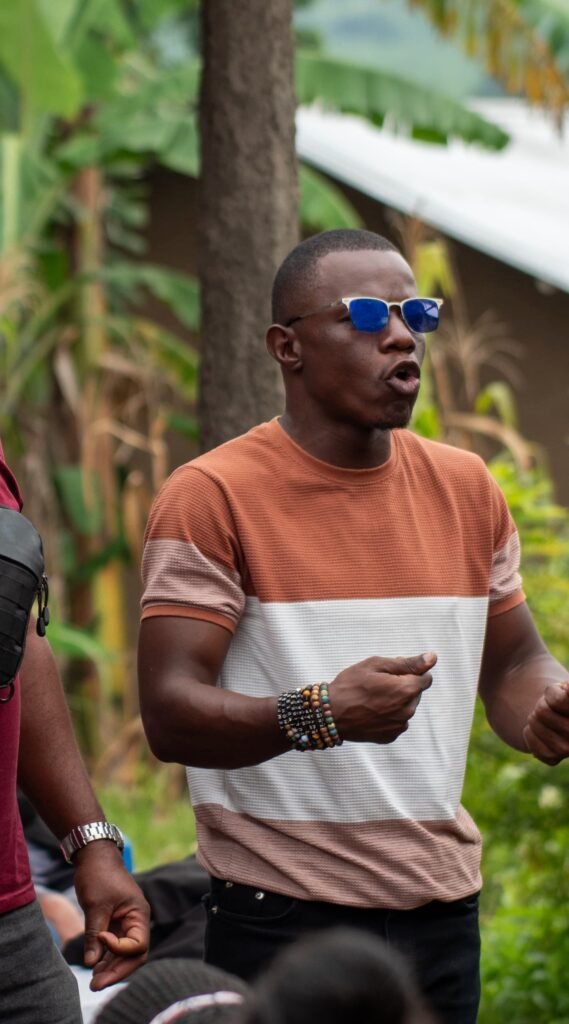
My experience is unusual because HIV is part of my public work.
I speak about it.
I write about it.
I advocate around it.
People sometimes know that I was born with HIV before they have ever met me.
That removes one version of the disclosure conversation.
But it creates another.
Imagine someone you’re interested in being able to Google one of the most intimate facts about your life before your first serious conversation.
There is freedom in openness.
There is also vulnerability.
Sometimes you wonder:
Do they see me?
Or do they see HIV?
Are they curious about Mark?
Or are they trying to understand what dating “someone with HIV” would mean?
That distinction matters to me.
Because I don’t want to be accepted despite HIV.
I want to be known as an entire human being.
Disclosure should not become confession
Language matters.
Sometimes we treat HIV disclosure almost like confession.
“When did you tell her?”
“Did you admit that you’re positive?”
“Does he know?”
The underlying assumption can sound like the person living with HIV has committed an offence that must now be confessed.
But having HIV is not a moral failure.
Disclosure should therefore sound less like:
“I have something terrible to confess.”
And more like:
“There is something important about my health that I trust you enough to share.”
That shift is enormous.
One comes from shame.
The other comes from agency.
But responsibility still matters
I don’t want this argument misunderstood.
Talking about the risks of disclosure does not mean honesty doesn’t matter.
It does.
Sexual partners deserve accurate information relevant to their health and the ability to make informed choices, and people living with HIV also need to understand the laws that apply where they live.
Trust matters too.
Relationships cannot be built sustainably on deliberate deception.
But responsibility cannot mean pretending disclosure happens in a vacuum.
We can simultaneously say:
People should act responsibly toward their partners.
And:
Society should create conditions where disclosure does not expose people to unnecessary harm.
Those ideas are not contradictory.
They depend on each other.
Maybe we’re asking the wrong question
For years, HIV programmes have asked:
“How do we encourage people living with HIV to disclose?”
Maybe we also need to ask:
“How do we make people safer to disclose to?”
That changes everything.
Now the responsibility isn’t placed entirely on the person living with HIV.
We begin teaching everyone else:
How do you respond when someone discloses?
How do you protect their confidentiality?
How do you learn the facts before reacting?
How do you discuss sexual health without humiliation?
How do couples test together?
How do we make U=U common knowledge?
How do we protect people from violence following disclosure?
How do we make relationships places where difficult truths can be discussed safely?
Perhaps the problem isn’t always that people living with HIV are afraid to disclose.
Perhaps sometimes we haven’t given them enough trustworthy people to disclose to.
Disclosure should be a conversation, not a verdict
Imagine a different kind of disclosure.
Someone says:
“There’s something important I want you to know. I’m living with HIV. I’m on treatment, and my viral load is undetectable.”
Instead of panic, the other person says:
“Thank you for trusting me.”
Then they ask questions.
They learn.
They talk about testing.
They discuss sexual health.
They talk about U=U.
They talk about what the diagnosis means and what it doesn’t mean.
Maybe the relationship continues.
Maybe it doesn’t.
Disclosure does not obligate someone to remain in a relationship.
But regardless of the outcome, dignity remains.
That is what healthy disclosure should look like.
Not:
“Will you accept me?”
But:
“Can we have an honest, informed conversation and then decide what is right for both of us?”
That returns some balance to the relationship.
The person receiving disclosure has power
And this is perhaps the part I most want people who are HIV-negative to understand.
When someone tells you they are living with HIV, you may feel vulnerable because you have just received unexpected information.
Your feelings matter.
Your questions matter.
Your sexual health matters.
Your choices matter.
But remember something:
The person sitting opposite you is vulnerable too.
Perhaps more than you realize.
They may have rehearsed that conversation twenty times.
They may be watching your facial expression.
Your silence.
The way you move your chair.
The questions you ask.
They may remember your reaction for years.
You don’t have to pretend.
You don’t have to immediately know what you think.
You don’t have to continue a relationship you don’t want.
But you can respond with humanity.
You can protect their privacy.
You can ask questions respectfully.
You can educate yourself.
You can say:
“I need some time to understand this.”
without making someone feel contaminated.
How we receive vulnerability tells people whether honesty is safe.
The real goal shouldn’t be disclosure
This may sound strange coming from an HIV advocate.
But I don’t think disclosure itself should be the ultimate goal.
The goal should be:
healthy people, informed partners, responsible choices, safe relationships and dignity.
Disclosure can help us get there.
Testing helps.
Treatment helps.
U=U helps.
PrEP helps.
Condoms help.
Education helps.
Trust helps.
But disclosure should never become a ritual where the person living with HIV stands before another human being waiting to discover whether they are still worthy of love.
That isn’t healthcare.
That is stigma wearing the clothes of responsibility.
What living with HIV has taught me about power
Being born with HIV means I never had a “before HIV.”
It has always been part of my life.
But over the years, I’ve learned that one of the most powerful things I can do is decide what HIV means in my own story.
I cannot control every person’s reaction.
I cannot control every assumption.
I cannot control stigma.
I cannot control whether someone chooses me.
But I can control whether their reaction becomes my identity.
That is where the power returns.
Disclosure isn’t:
“Here is my diagnosis. Please decide whether I’m good enough.”
It is:
“Here is something true about me. Now let’s discover whether we are capable of building something honest together.”
Those are completely different positions.
One begs for acceptance.
The other offers truth.
The Day I Understood
Perhaps that is the day I finally understood disclosure.
It isn’t merely about telling someone your HIV status.
It is about trust.
Privacy.
Sex.
Health.
Fear.
Law.
Stigma.
Love.
Responsibility.
And power.
We should absolutely teach people living with HIV how to navigate disclosure responsibly.
But maybe it’s time we taught everyone else something too.
How to deserve disclosure.
How to become the kind of partner, friend, family member or community in whom another human being can safely place something precious.
Because when someone tells you:
“I’m living with HIV,”
they haven’t handed you a weapon.
They’ve handed you their trust.
What you do with it says something about you too.
And perhaps the future of HIV disclosure shouldn’t be built around people living with HIV becoming braver and braver.
Perhaps it should be built around all of us becoming safer people to tell.

Leave a Reply