

We have ARVs.
We have awareness campaigns.
We have global funding (e.g. PEPFAR), international conferences (e.g. IAS), and decades of research.
So why does HIV stigma still feel so alive in 2026?
Why are people still whispering?
Why are conversations still happening in corners instead of in the open?
Why do so many people living with HIV still feel the need to hide?
This is the uncomfortable truth: stigma is no longer a knowledge problem. It is a leadership problem.
For years, the global response to HIV has focused heavily on education. The assumption has been simple—if people understand HIV, they will stop fearing it. If they stop fearing it, they will stop stigmatizing those who live with it.
But that assumption is flawed.
Because stigma was never just about what people know. It is about what people believe. It is about what people have been taught—culturally, socially, and spiritually—about morality, identity, and worth.
And those beliefs are not easily changed by information alone.
The Illusion That Awareness Is Enough
Across many communities today, awareness about HIV is significantly higher than it was twenty years ago.
People know that HIV is not spread through casual contact.
People know that treatment allows individuals to live long and healthy lives.
People know that HIV is manageable.
And yet, something has not shifted.
The distance remains. The discomfort remains. The judgment—whether spoken or unspoken—remains.
This is because awareness campaigns often stop at information. They focus on facts, but avoid confronting the deeper narratives that shape how people interpret those facts.
No poster challenges the belief that HIV is a consequence of “bad behavior.”
No radio campaign dismantles the idea that being associated with HIV lowers someone’s social value.
No billboard addresses the quiet moral hierarchy that exists in many communities.
So people learn the science, but keep the stigma.
They know better—but they do not do better.
Because no one has asked them to confront what they believe.
Stigma Lives in Culture, Not Just in Ignorance
If stigma were purely about ignorance, it would have disappeared by now.
But stigma is embedded in culture.
It is passed down in conversations at home.
It is reinforced through jokes, warnings, and subtle comments.
It is shaped by what is said—and more importantly, by what is left unsaid.
From a young age, many people are not just taught about HIV as a virus. They are taught to associate it with shame.
Not always directly. Not always intentionally. But consistently.
And by the time they grow up, those associations are deeply internalized.
This is why someone can be educated and still stigmatize.
This is why someone can understand HIV medically and still fear it socially.
This is why progress in knowledge has not translated into progress in acceptance.
Because culture has not been challenged at the same level as information has been distributed.
The Role of Faith: A Double-Edged Influence
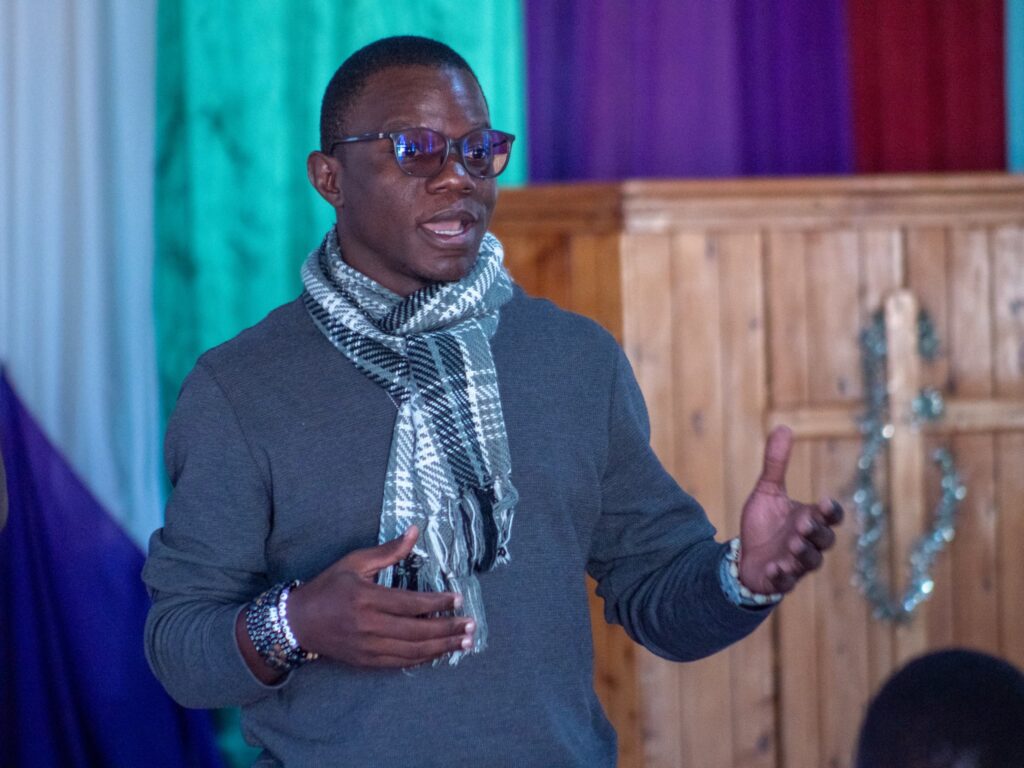
Faith plays a powerful role in shaping how communities think, behave, and respond to issues like HIV.
At its best, faith has been a source of compassion. There are churches and faith leaders who have walked alongside people living with HIV, who have created safe spaces, and who have used their platforms to promote dignity and care.
But at its worst, faith has contributed to silence—and in some cases, to stigma itself.
In many spaces, HIV is still spoken about indirectly. It is framed in moral language. It is associated, subtly or explicitly, with sin, consequence, or personal failure.
Even when this is not stated outright, it is implied.
And implication is powerful.
Because when HIV is never addressed clearly, it becomes something people feel but cannot talk about. It becomes something that exists in the shadows of sermons, rather than in the clarity of truth.
Silence, in this context, is not neutral.
It creates room for assumptions.
It allows harmful beliefs to remain unchallenged.
It reinforces the idea that HIV is something to be hidden, not understood.
If faith communities are serious about addressing stigma, then they must move beyond compassion in private and into clarity in public.
They must speak directly, honestly, and consistently about HIV—not as a moral issue, but as a human one.
The Personal Reality of Living With HIV
Living with HIV is not just about taking medication. It is about navigating people.
It is about managing how much you say, who you tell, and when you tell them.
It is about reading reactions, even when no words are spoken.
It is about carrying an awareness that, at any moment, perception can change.
Sometimes the stigma is obvious.
But often, it is subtle.
It shows up in hesitation.
In the slight shift in tone.
In the questions people avoid asking directly.
And sometimes, it shows up in overcompensation—when people try so hard to appear accepting that it becomes uncomfortable in a different way.
What this reveals is that stigma is not always loud. It is often quiet, internal, and deeply ingrained.
And that makes it harder to confront.
Because you cannot challenge what people refuse to acknowledge.
This is why, for many, the biggest challenge is not access to treatment.
It is access to dignity.
Where Leadership Is Failing
If stigma is still present—and it is—then leadership has not gone far enough.
Political leaders often speak about HIV in terms of numbers. Infection rates. Treatment coverage. Funding allocations.
These are important. But they are not enough.
Because stigma is not a statistic. It is a lived experience.
Community leaders organize events, campaigns, and workshops. But many avoid the uncomfortable conversations that would actually challenge belief systems.
Faith leaders speak about love, acceptance, and compassion—but sometimes stop short of addressing the specific attitudes that contradict those values.
And influencers—those with growing platforms—often remain silent altogether, choosing safety over impact.
This is the common thread: leadership that is visible, but not vocal where it matters most.
Comfortable, but not courageous.
Because real leadership requires more than presence. It requires confrontation.
It requires the willingness to name what is wrong, even when it is unpopular.
It requires the courage to challenge not just behavior, but belief.
From Awareness to Confrontation
If we are serious about ending HIV stigma, then the strategy must evolve.
Awareness was necessary. But it is no longer sufficient.
What is needed now is confrontation—not of people, but of ideas.
Leaders must begin to challenge the narratives that sustain stigma.
Churches must address HIV directly from the pulpit—not as a side note, but as a central issue of dignity and truth.
Schools must normalize conversations about HIV so that young people grow up without inherited fear.
Community leaders must create environments where disclosure is not met with judgment, but with respect.
Media platforms must move beyond storytelling that sensationalizes HIV, and instead humanize it.
And individuals with influence—whether large or small—must decide to use their voices.
Not later. Not when it is convenient. Now.
Because silence, at this stage, is no longer ignorance. It is avoidance.
Centering Lived Experience
One of the biggest gaps in the fight against stigma is whose voices are being amplified.
Too often, conversations about HIV are led by institutions, organizations, and professionals—many of whom are well-intentioned, but removed from the daily reality of living with HIV.
Lived experience is not an accessory to this conversation. It is essential.
Because no amount of research can fully capture what it feels like to navigate stigma.
No policy document can replicate the emotional and social complexity of disclosure.
No campaign can replace the authenticity of someone speaking from their own life.
People living with HIV must not just be included. They must be centered.
Not as symbols. Not as case studies. But as leaders.
Because the most powerful way to dismantle stigma is not to talk about people. It is to listen to them.
A Different Standard of Leadership
Ending HIV stigma requires a shift in how leadership is understood and practiced.
It is no longer enough to be supportive in principle. Leaders must be specific in action.
They must be willing to say:
- “We have allowed harmful beliefs to go unchallenged.”
- “We have been silent where we should have spoken.”
- “We must take responsibility for the culture we have created.”
This kind of leadership is not comfortable.
It may be resisted. It may be criticized. It may even be misunderstood.
But it is necessary.
Because change does not come from maintaining the status quo more efficiently. It comes from disrupting it entirely.
The Cost of Inaction
If stigma is allowed to continue, the consequences go beyond social discomfort.
Stigma discourages testing.
It delays treatment.
It isolates individuals.
It affects mental health.
It weakens the very systems that are meant to support people.
In other words, stigma is not just a social issue. It is a public health issue.
And every moment it is ignored, its impact grows.
This is why addressing stigma is not optional. It is urgent.
A Final Truth
There is a tendency to believe that stigma will fade over time—that as generations change, attitudes will naturally improve.
But history shows that silence does not lead to progress.
Action does.
Honest conversations do.
Bold leadership does.
Visible, consistent advocacy does.
Stigma does not survive because people do not know better.
It survives because leaders refuse to lead better.
And until that changes, no amount of awareness will ever be enough.

Leave a Reply